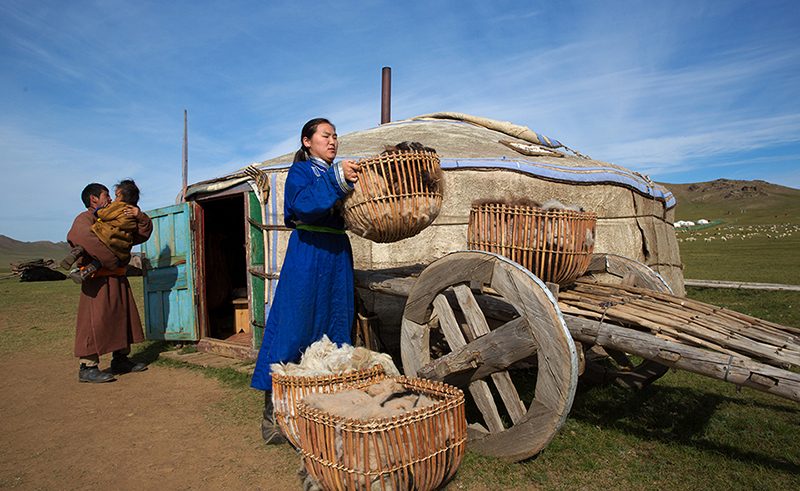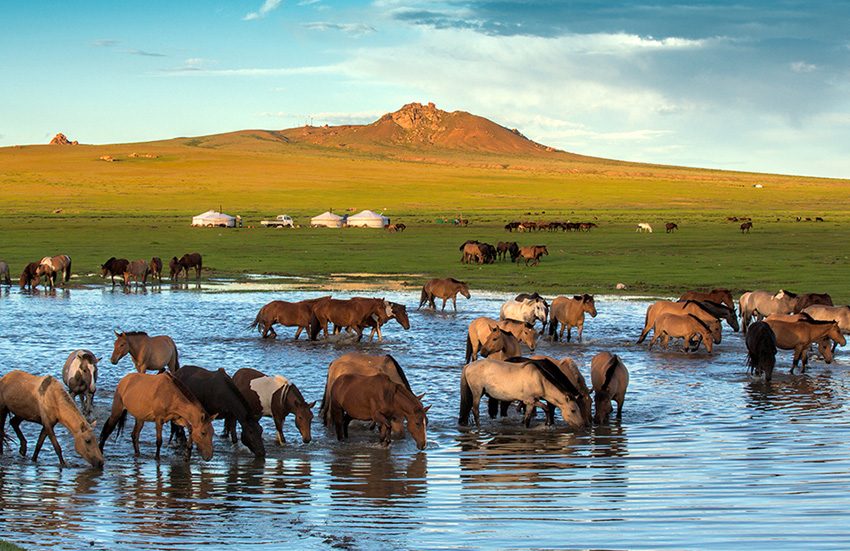
Late winter in the southern Gobi is quiet. The summer travellers are months away, the ground is hard and pale, and the wind has the run of the plain. Then, for two days in early February (the festival moved there from early March in 2023), the herding families of Bulgan soum in Umnugovi province bring their camels together in one place. Riders in their best deel, camels in heavy winter wool and decorated saddles, families who may not have seen each other since autumn. This is the Thousand Camel Festival.
Why the camel
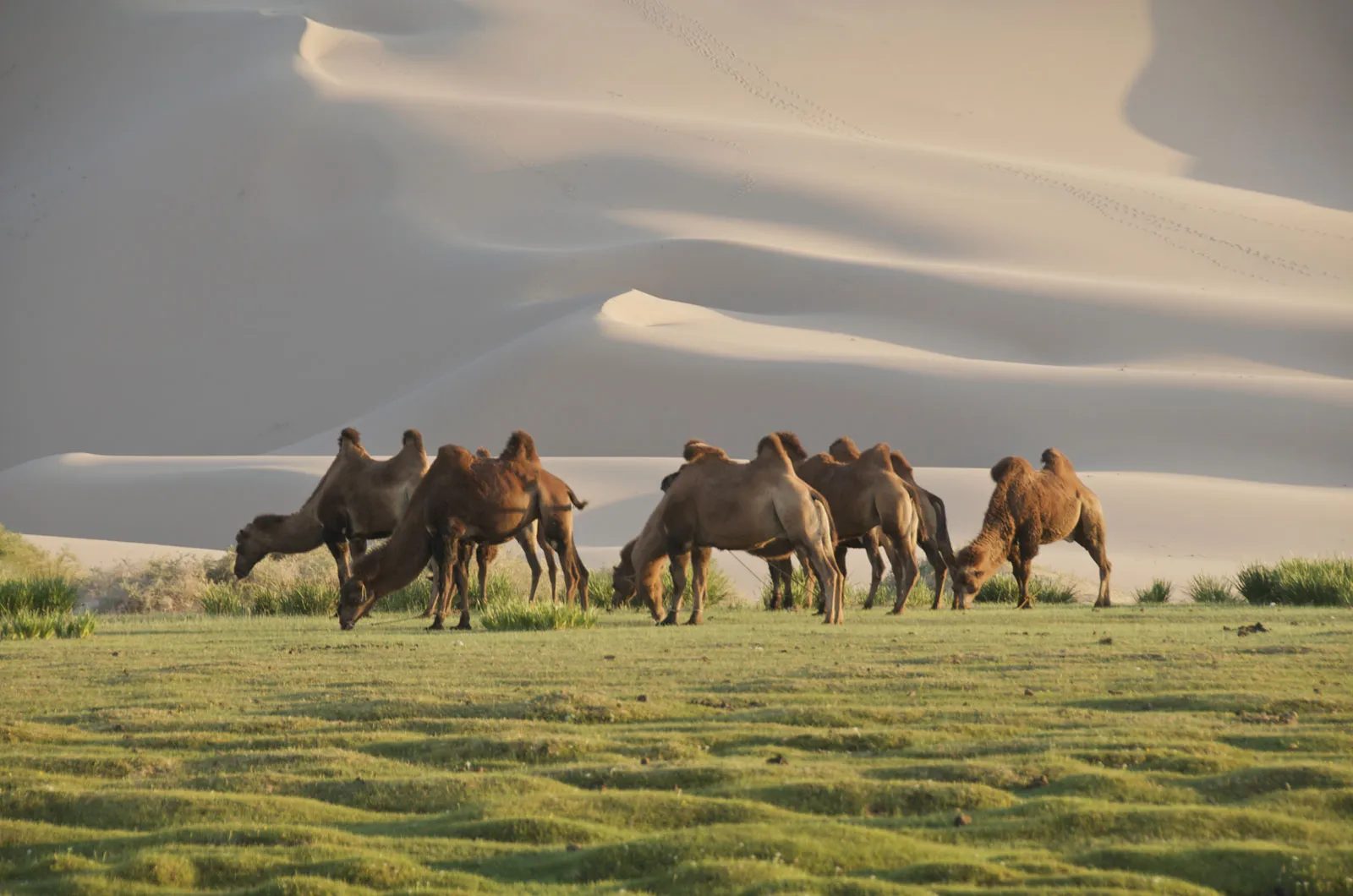
The Bactrian camel is the two-humped camel of Central Asia, and in the Gobi it is the animal that makes life possible. It is one of the five kinds of livestock that Mongolian herders keep, alongside horses, cattle, sheep and goats, and in the desert it does work the others cannot.
A Bactrian camel can go for long stretches without water and lives on the tough, salty plants of the desert floor. The humps store fat, not water, and they shrink and sag when the animal has drawn on its reserves. In winter the camel grows a thick coat of wool, and in spring it sheds it in great tufts, which herders collect for spinning and felt. Camels carry the ger when a family moves camp. They give milk, which is drunk fresh or fermented. They give wool, meat and hide.
The domestic Bactrian camel has a wild relative, the wild Bactrian camel, which survives in small numbers in the remote far south west of Mongolia and across the border in China. It is critically endangered and is a separate animal from the herds you will see at the festival.
The festival grew out of concern among Gobi herders that the number of domestic camels was falling and that the skills of raising and riding them were being lost. It is a celebration, but it began as a way to keep a way of life going.
What happens over the two days
The programme is set by the organisers each year and can change, but the core of the festival has stayed the same:
- Camel races. Riders take their camels over a long course across the open plain. The start is a moment of noise and dust; the finish comes much later, and the crowd waits for it.
- Camel polo. Teams on camelback chase a ball across the field with long sticks. It is as unusual to watch as it sounds.
- The parade and best dressed camel. Herders show their animals in full harness, with embroidered saddle cloths and decorated saddles, and families in their finest deel.
- Crafts and food. Camel wool goods, felt and the dairy of the Gobi, with music, singing and the conversation of a community gathered in one place.
The races are the herders' own sport, run by their own rules, with their own animals. We go as guests and watch as guests. Our guides will explain what is happening, introduce you where it is welcome and keep you out of the way of the riders and the camels.
The weather in late winter
Early February in the Gobi is deep winter. Days are usually dry and bright, but mornings and nights are bitterly cold, well below freezing, and the wind is the thing to plan for: on an open festival ground it cuts through ordinary clothing. The wind can also carry dust and sand.
Pack as you would for a cold, windy day outdoors from morning to dusk:
- A warm down jacket with a hood, and a windproof layer
- Thermal base layers, a fleece, warm trousers
- Insulated boots, warm socks and a spare pair
- A warm hat, a buff or scarf for wind and dust, and mittens as well as gloves
- Sunglasses, sunscreen and lip balm, because the light is strong
Nights are spent in a heated ger or a lodge, so the cold you need to dress for is the cold of standing outdoors for hours.
How to go
The usual route is a domestic flight from Ulaanbaatar to Dalanzadgad, the provincial centre of Umnugovi, then a drive across the plain to Bulgan soum. Exact festival dates are confirmed by the organisers each year. We plan around the date the organisers announce, early February in recent years, and arrange the flights and the family stay well ahead.
Most travellers stay a few nights around the festival rather than flying in and out. The Gobi in late winter is empty of tour traffic. The Flaming Cliffs at Bayanzag and the great dune fields, crowded in summer, can be yours alone. A night or two with a camel herding family, a short ride on a well handled camel, and time to sit in the ger and talk while the herders have time to spare are, for many of our guests, the heart of the trip.
Our own journey, with the festival, a host family stay and the winter Gobi, is set out on the Thousand Camel Festival page. To start planning, tell us your dates on the planning page, or read more about the Gobi through the year.