In July the steppe looks endless and easy. By September the mood on a herding camp has changed. The nights are cold, the grass has turned to straw, and every family is working towards a date nobody can name in advance: the first hard freeze. A Mongolian winter can run from October into April. What a family does in the autumn decides how its animals, and its people, come through it.
A year in four camps
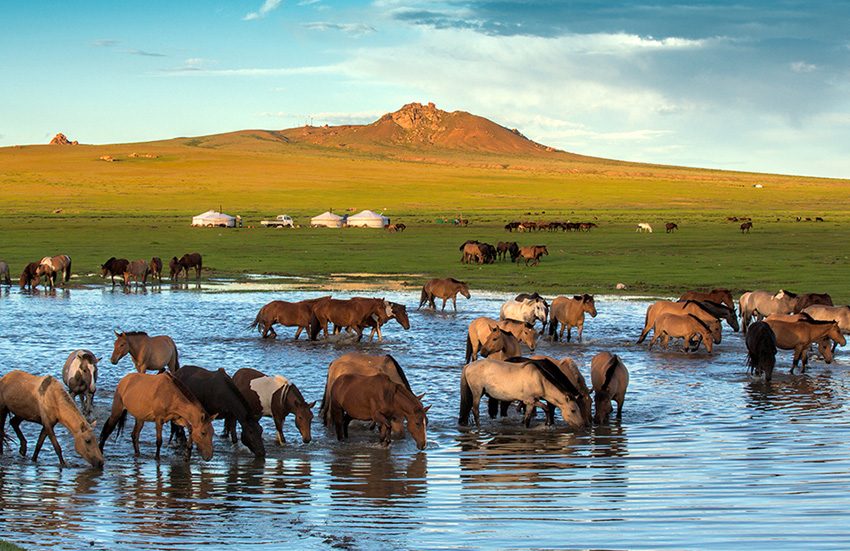
Most herding families in Mongolia move between seasonal camps rather than wandering at random. There is a spring camp, a summer camp, an autumn camp (namarjaa) and a winter camp (övöljöö). The summer camp sits near water and open grass. The winter camp is chosen for the opposite reasons: shelter from the wind, a south-facing slope that catches the low sun, and pasture that has been rested all summer so there is something left to graze under the snow.
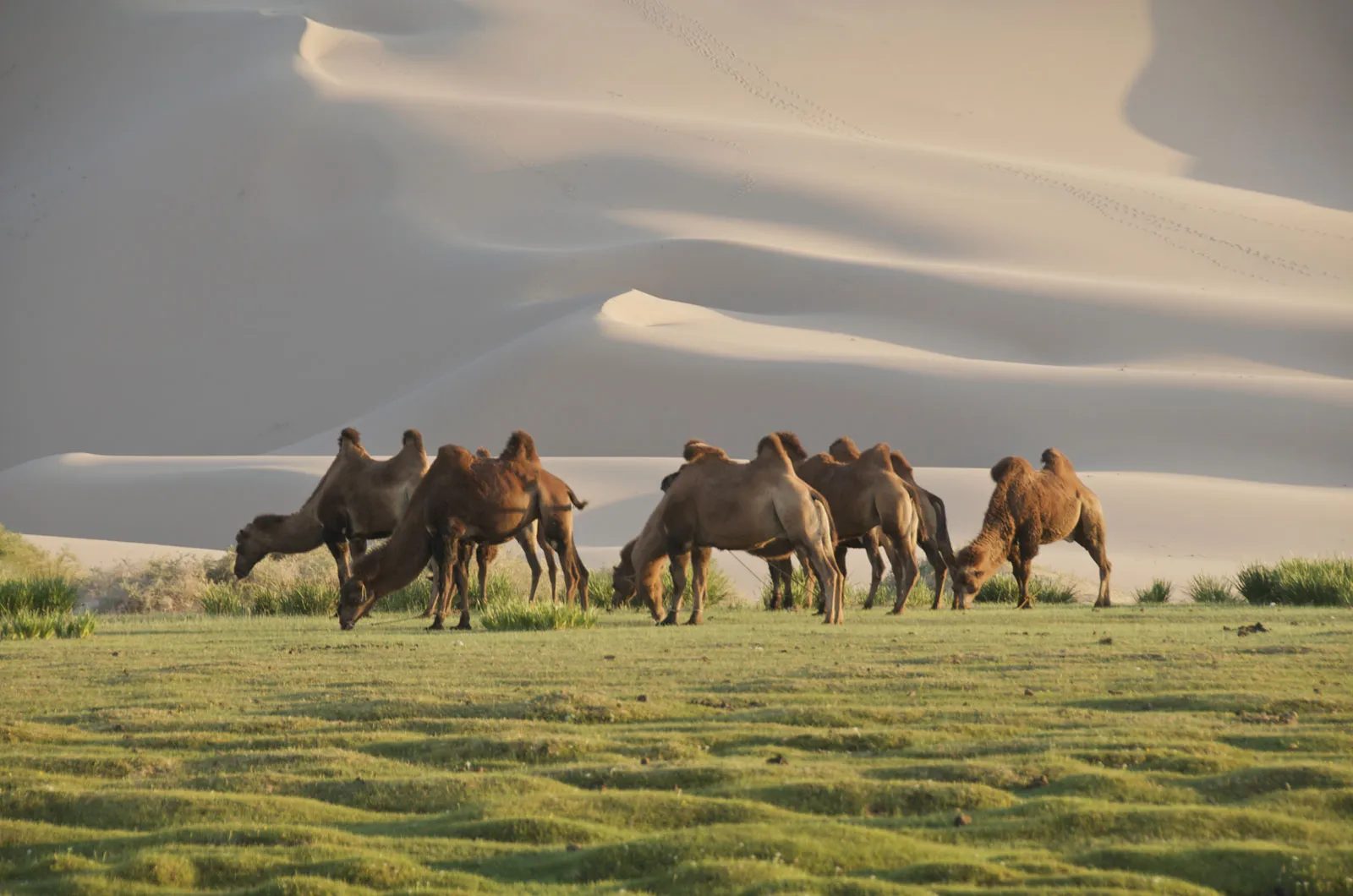
Many families return to the same winter site year after year. The move itself usually comes in late autumn. The ger is taken down in a few hours, loaded onto a truck, a cart or, in the Gobi, onto camels, and put up again at the winter site the same day.
The otor: fattening before the cold
An animal goes into winter carrying its own reserves. The fat a sheep or a horse puts on in late summer and autumn is what keeps it alive in February. To give the herds the best of the remaining grass, many families send animals on otor: a seasonal move to distant pasture, often with only a few herders and a light camp, while the rest of the family stays behind.
Otor is hard, mobile work: weeks away in a small tent or a stripped-down ger, moving whenever the grass runs short. It also spreads the pressure on the land.
Fuel and fodder
Much of the steppe has no trees. The fuel that heats a ger and cooks the food is dried dung, argal, gathered from the pastures through the summer and autumn and stacked near the winter camp. Dry dung from cattle and yaks burns steadily with little smoke.
Hay is the second store. In late summer families cut grass in the river valleys, dry it and stack it, along with any fodder they can buy. Hay is the reserve for the worst weeks, when snow or ice seals the pasture and the animals cannot reach the grass beneath.
Idesh: the winter meat
When the days are cold enough that meat will stay frozen outside, families slaughter the animals that will feed them through the winter. This meat is called idesh. It is usually done in late autumn or early winter, when the animals are at their heaviest and the cold works as a natural freezer.
The work is done quietly, quickly and with practised care, and nothing is wasted. Part of the meat is frozen whole and kept in a store shed or a cold corner of the camp. Part may be cut into strips and air dried as borts, which keeps for months and weighs little. For a family on the steppe, idesh is not a festival. It is food security for the long cold months.
Felt for the ger
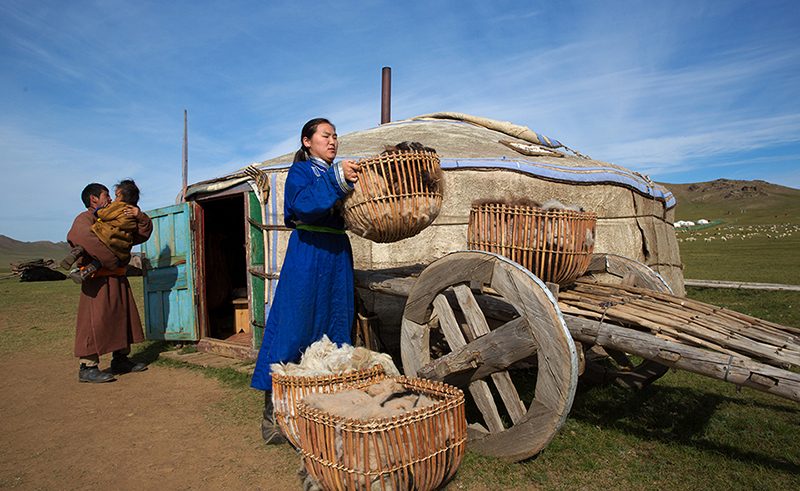
A ger in summer has a single layer of felt under its canvas cover, and the sides can be rolled up to let the breeze through. For winter the family adds felt: extra layers over the roof and walls, and felt banked around the base so the wind cannot find its way under the lattice. New felt is made from the summer's sheep wool, beaten, rolled and pressed, often as shared work between neighbouring families.
Shelter for the animals
The winter camp is built around the animals as much as the people. Most have a khashaa, a fenced enclosure, and a roofed shed or pen where sheep and goats sleep out of the wind. Over the years the floor of these pens builds up into a thick layer of dried dung that insulates the animals from the frozen ground. In autumn the shelters are repaired before the first snow.
Why it matters: the dzud
Mongolians have a word for the winter that goes wrong: dzud. It can be a summer drought that leaves animals thin, followed by deep snow, or a crust of ice over the grass that the herds cannot break. In a bad dzud year, livestock losses across the country can be severe. Autumn preparation is a family's defence against it. Fat animals, a full fuel stack, hay in reserve and a sound shelter are the difference between a hard winter and a ruinous one.
Visiting a herding family in autumn
Autumn is a fine time to be a guest on the steppe. The summer crowds have gone and the light is low and clear. It is also a working season, and a good guest fits around the work.
When we place travellers with a host family in September or October, a few things matter:
- Arrive when the family expects you. Our guide arranges the visit around the family's week.
- Offer to help, and accept the answer. You may be handed a basket for argal or asked to hold a gate.
- Ask before taking photographs of people, and of the slaughter of animals in particular. If idesh is under way, you are welcome to stay away from it. Nobody will think less of you.
- Inside the ger, move clockwise, do not step on the threshold, and accept food and tea with your right hand, or both hands.
- Dress for real cold. Autumn nights on the steppe drop below freezing.
If you would like to spend part of an autumn journey with a herding family, tell us your dates on the planning page. For more on the year-round life of the steppe, read how the herding life really works.