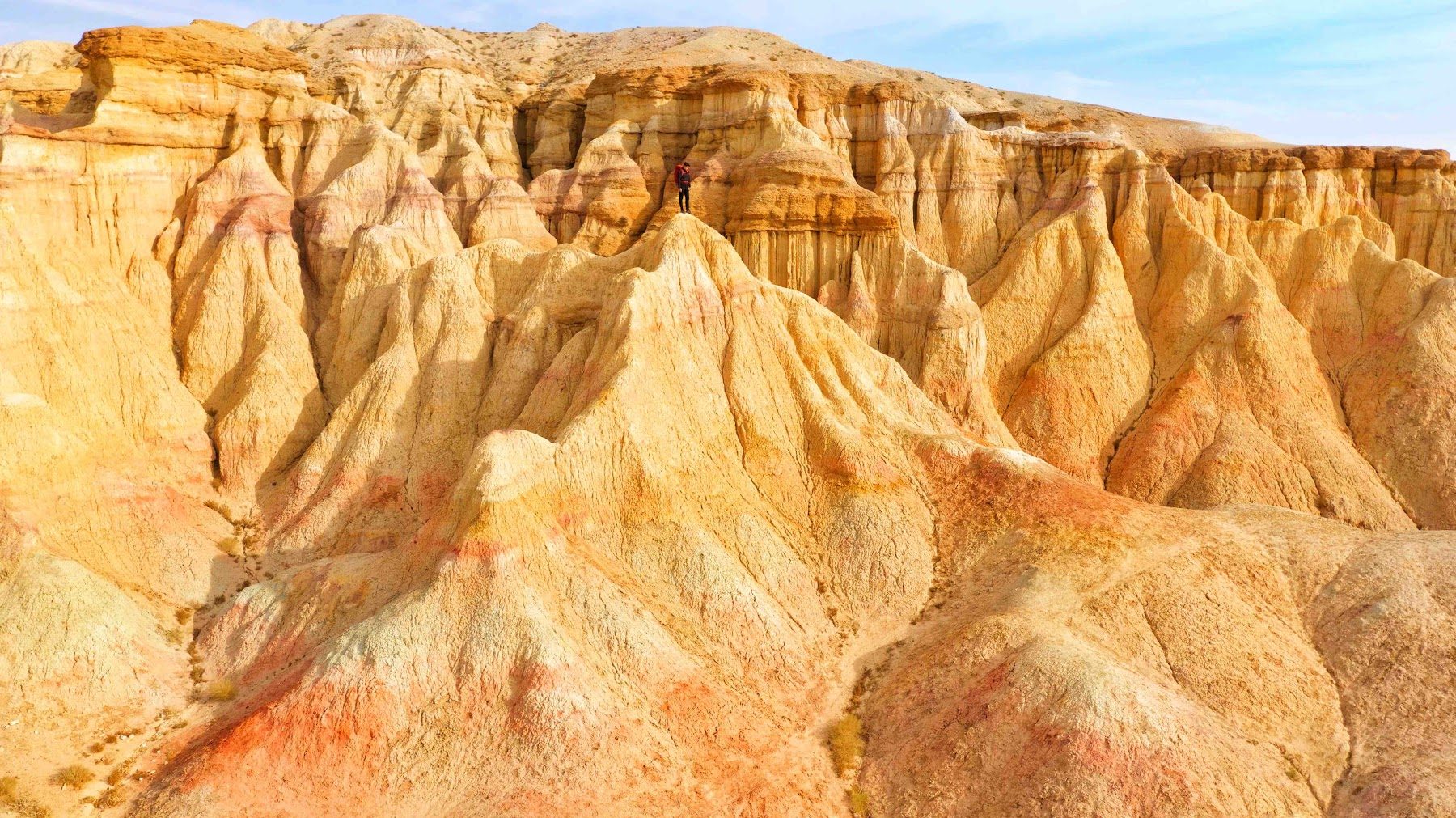
The Gobi is mostly not sand. It is gravel plain, red cliff, ice-filled gorge, and grass thin enough that you can count the camels on it from a kilometre away. The dunes exist, and they are enormous, but they are one day in a journey of five or six.
Getting there
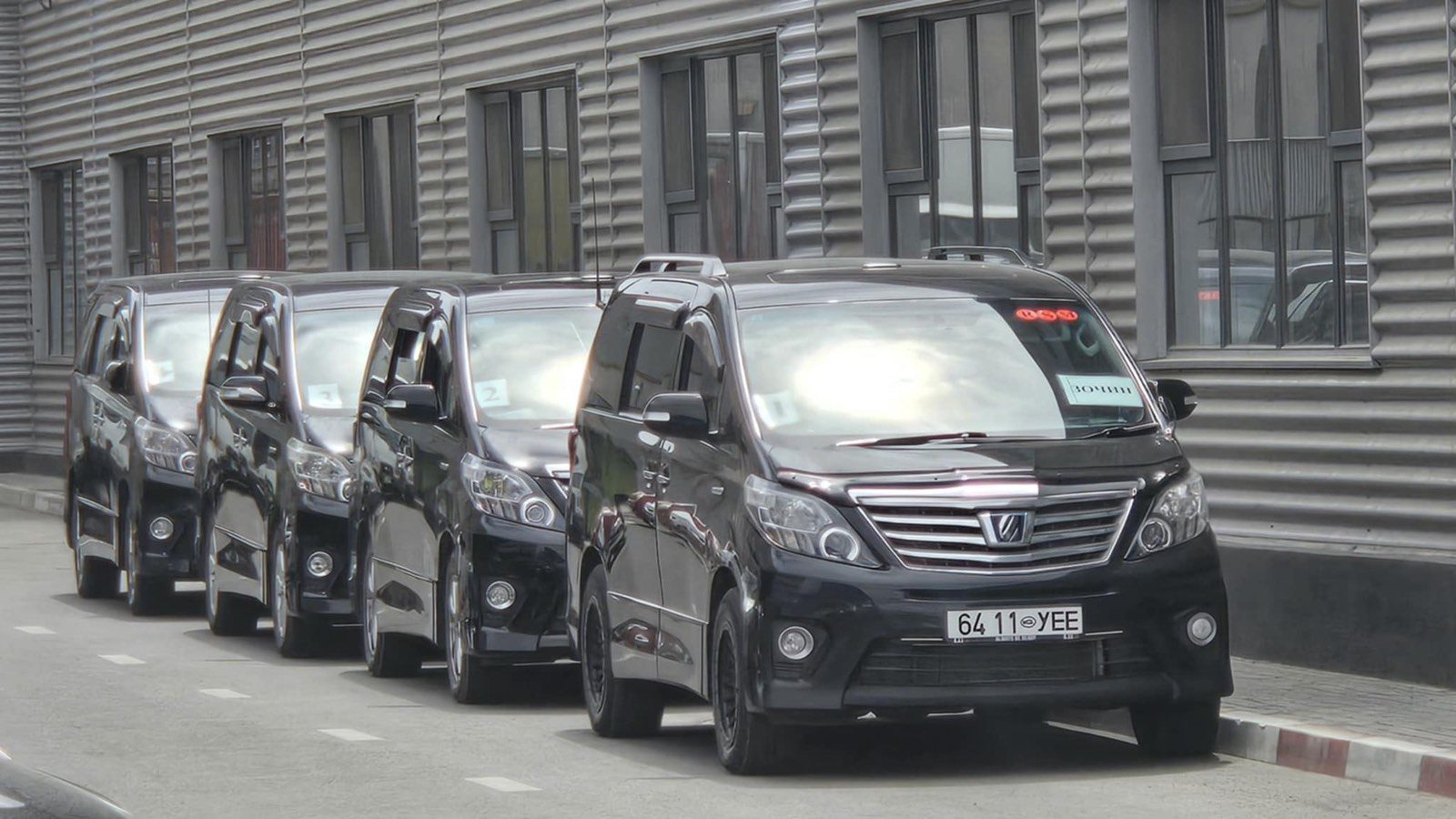
Dalanzadgad, the provincial capital of Ömnögovi, is a flight of about ninety minutes from Ulaanbaatar. We fly guests in rather than drive the 550 kilometres south, because the drive takes a full day each way and the Gobi’s distances begin once you land. Our Land Cruisers and a driver are waiting at the airstrip. From there, the main sights sit in a rough triangle of two to four hours’ driving between each, on tracks across the gravel. The vehicle days are part of the point: gazelle crossing ahead, a herder’s motorbike on the horizon, and nothing else.
Yolyn Am
First, usually, because it is close to Dalanzadgad. Yolyn Am is a deep gorge in the Gurvan Saikhan mountains, and its floor holds ice into June and sometimes July. You walk in along a stream between cliffs, with pikas whistling from the rocks and lammergeiers overhead. It is cool in the gorge when the plain outside is hot, which is why the Gobi is not what people expect. Allow two to three hours on foot.
Khongoryn Els
The singing sands. A line of dunes about 100 kilometres long and, at the highest point, around 300 metres tall, with a green river valley and a herder’s pasture at their foot. We time the climb for late afternoon. It takes most people forty minutes to an hour to reach the crest, in soft sand, on all fours for the last part, and the wind at the top makes the dune hum. Then the sun goes down over the whole Gobi and you slide back to the vehicle in the dusk. It is the single view most of our Gobi guests describe first when they get home.
Camel families
Bactrian camels, two-humped and shaggy, are the Gobi’s animal, and the families that keep them live along the valley below the dunes. We visit the same families each year. You ride a camel for an hour or two along the base of the dunes, which is slower and stranger than a horse, and you sit in the ger afterwards with camel milk tea and dried curd. In spring the families are calving and the babies are absurd. Ask about the camel’s wool, which is spun and knitted and sold by the family. It is worth buying here.
Bayanzag, the Flaming Cliffs
Red sandstone cliffs on the edge of a saxaul forest, and the place where Roy Chapman Andrews and the American Museum of Natural History expedition found the first nest of dinosaur eggs in the 1920s. The cliffs are best at sunset, when they go from orange to red to something like embers. You walk along the rim and down through the gullies. Fossils are still found here and they belong to Mongolia: look, photograph, leave. The saxaul, a low twisted tree of the Gobi, is the other reason to come, and the camels eat it.
Private camps
Ger camps in the Gobi range from basic to good. What we prefer, for guests who want it, is a private camp: our own gers set up for you alone in a place we have chosen, with our own cook, a proper bed, and a bathroom tent, positioned so that nobody else is within sight. Near the dunes, in a valley of the Gurvan Saikhan, or on the rim above Bayanzag. The night sky in the Gobi is the reason. There is no light for a hundred kilometres and the Milky Way is bright enough to walk by. We also use the established camps where they are the sensible choice and we say which is which.
When to go
May and June for cool days, calving camels and ice in Yolyn Am. September for warm, still evenings and the clearest skies. July and August work too, but the middle of the day is hot on the plain and we build in a rest after lunch. Sandstorms are a spring risk and we watch the forecast. Five nights is enough for the triangle. Seven lets you add the far west of the province, and most people who have seven do not regret it.
Talk to us
We design private journeys only. Tell us your dates and whether you want the private camp or the established one, and a person who lives here will reply within four hours in office time. No price list until we have talked.